Skip to content

hBARSCI is now The Lab Stockroom
Same team. Bigger catalog, faster shipping.

The Lab Stockroom

ROCK TUMBLING: FROM START TO FINISH

Learn more about the rocks and minerals in your collection, explore the different tumbling grits, and find answers to commonly asked questions.

Before You Begin Rock Tumbling

Gather Your Equipment

Gather Your Equipment

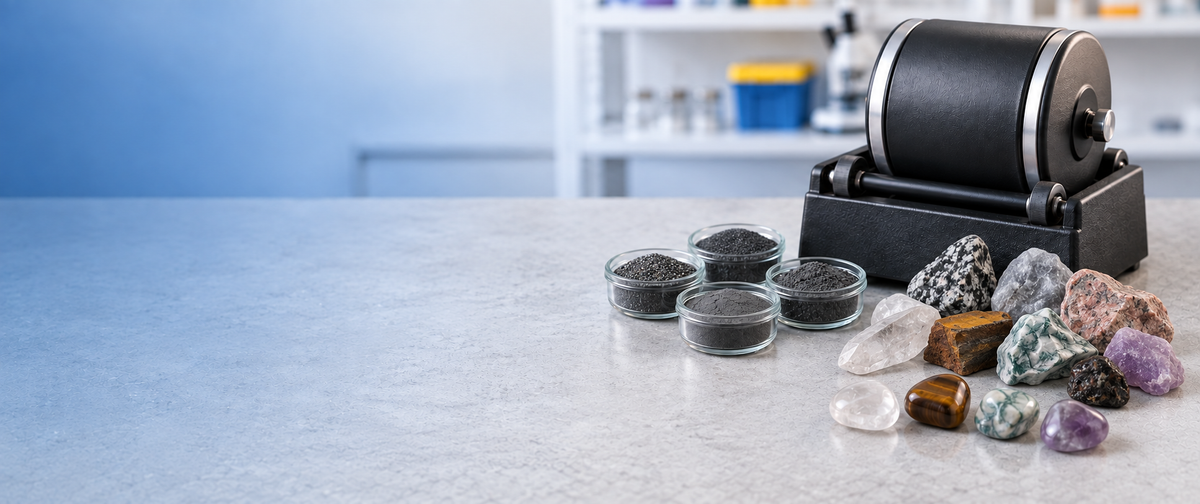
Purchase a rock tumbler and the required coarse grit, medium grit, fine grit, and polish. These items are not included with the rock collection.

Read the Instructions

Read the Instructions

Review your rock tumbler’s instructions before starting, including the recommended barrel capacity, water level, speed, and cycle times.

Inspect Your Rocks

Inspect Your Rocks

Check each rock for deep cracks, fragile edges, or loose pieces that could break during tumbling. Remove any heavily damaged specimens.

Capture the “Before”

Capture the “Before”

Photograph your raw rocks before tumbling so you can compare their original appearance with the finished, polished results.

Explore the Rocks in your collection

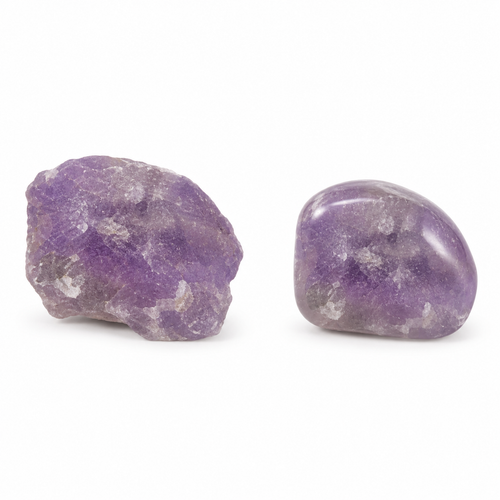
Amethyst

Amethyst

Mineral | Mohs Hardness: 7

Amethyst is the purple variety of quartz and often forms inside mineral-rich cavities in rock. Small amounts of iron and natural geological processes produce its purple color.

AFTER TUMBLING: Rounded edges and a glossy surface that highlights its lavender-to-violet coloring.
Tiger's Eye

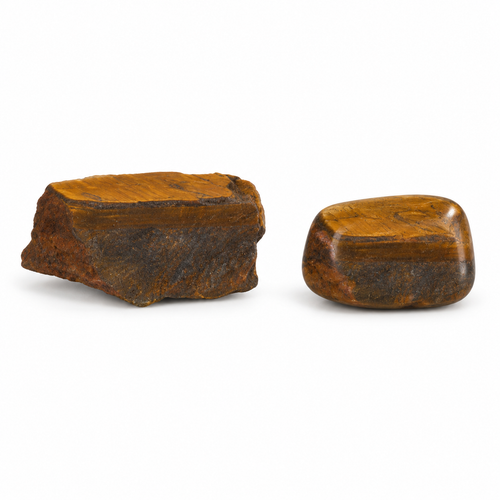
Tiger's Eye

Mineral | Mohs Hardness: 7

Tiger’s eye is a variety of quartz known for its golden-brown bands. Its fibrous internal structure produces a shifting reflection called chatoyancy.

AFTER TUMBLING: A smooth, silky finish that makes its golden color and reflective bands more noticeable.

Green Tree Agate

Green Tree Agate

Mineral | Mohs Hardness: 6.5–7

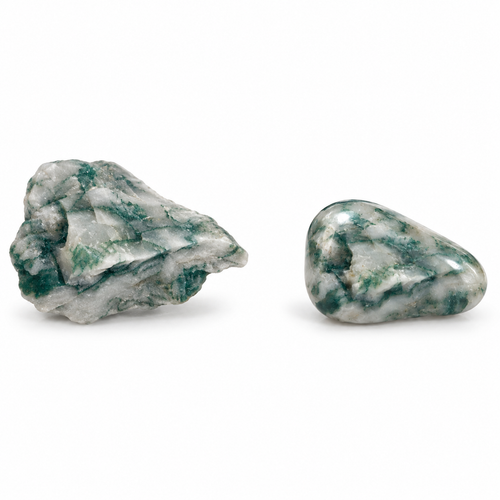
Green tree agate is a variety of chalcedony featuring green, branch-like mineral patterns. These natural markings often resemble trees, moss, or other plant life.

AFTER TUMBLING: A smoother surface that makes the stone’s green patterns clearer and more colorful.

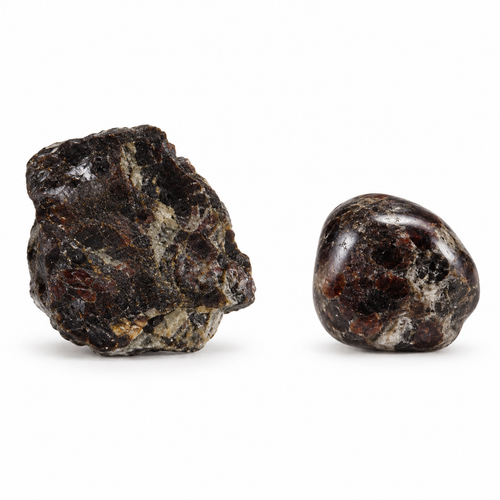
Garnet

Garnet

Mineral | Mohs Hardness: 6.5–7.5

Garnet is a group of minerals that commonly forms when existing rocks are changed by intense heat and pressure underground. Garnets occur in several colors, although deep red is the most familiar.

AFTER TUMBLING: A smoother surface with deeper red tones that may become easier to see under bright light.

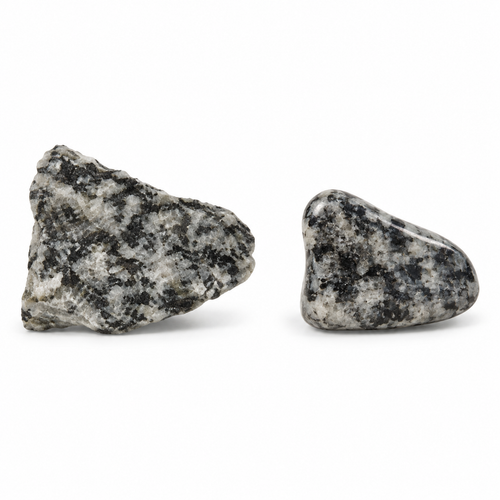
Diorite

Diorite

Igneous | Mohs Hardness: 6–7

Diorite forms when molten material cools slowly beneath Earth’s surface. This slow cooling allows its light and dark mineral grains to grow, creating its recognizable “salt-and-pepper” pattern.

AFTER TUMBLING: Rounded edges and a clearer speckled pattern. The amount of shine may vary between specimens.

White Quartzite

White Quartzite

Metamorphic | Mohs Hardness: 7

White quartzite begins as quartz-rich sandstone. Heat and pressure beneath Earth’s surface fuse the quartz grains together, creating a hard and durable rock.

AFTER TUMBLING: A smoother surface with a subtle glassy or crystalline shine.

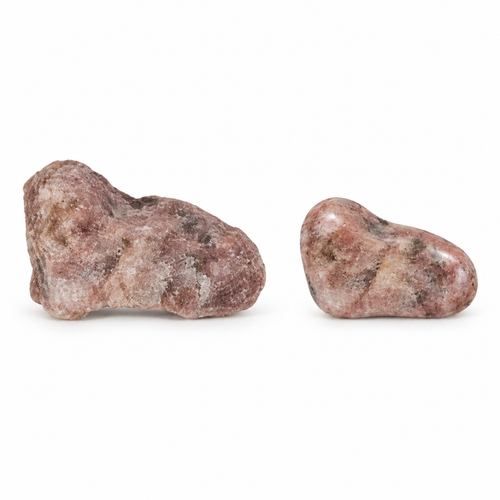
Pink Granite

Pink Granite

Igneous | Mohs Hardness: 6–7

Pink granite forms when magma cools slowly beneath Earth’s surface. Its pink color typically comes from feldspar, while quartz and darker minerals create its speckled appearance.

AFTER TUMBLING: A smooth finish that makes its pink color and contrasting mineral grains more noticeable.

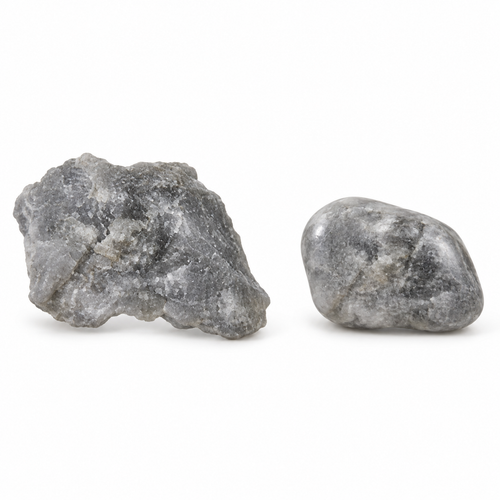
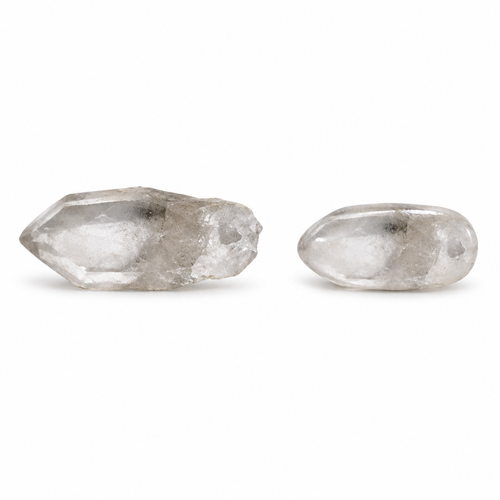
Quartz

Quartz

Mineral | Mohs Hardness: 7

Quartz is one of the most abundant minerals in Earth’s crust and is found in many types of rocks worldwide. It often forms when mineral-rich fluids cool inside cracks underground.

AFTER TUMBLING: Smoother edges and a glass-like shine. Natural fractures or cloudy areas may remain visible.

 The 4 Stages of Rock Tumbling 

  Follow the amethyst through each stage to see how its shape and finish change along the way.

Frequently asked questions

Why did my rocks get smaller?

Grit gradually removes material as the rocks tumble. Some reduction in size is normal, especially during the coarse-grind stage or when a specimen has softer areas and natural fractures.

Can all of the rocks tumble together?

Rocks with similar hardness can generally be tumbled together. Softer specimens may wear down faster or be scratched by harder rocks, so inspect the batch between stages.

Should I clean the tumbler between stages?

Yes. Completely clean the rocks, barrel, lid, rim, and other components before adding the next grit. Even a small amount of coarse grit can scratch rocks during the polishing stages.

Can I pour the slurry down the sink?

No. Rock-tumbling slurry can settle and harden inside pipes. Allow it to dry and dispose of it with household trash, following any applicable local disposal guidelines.

Will my finished rocks look exactly like the pictures?

Not necessarily. Every specimen is naturally different, and the final color, shape, size, pattern, and shine will vary. Some rocks also polish more evenly than others.

PLEASE NOTE: This set includes the rocks for tumbling only. A rock tumbler, grit, and polish are not included.