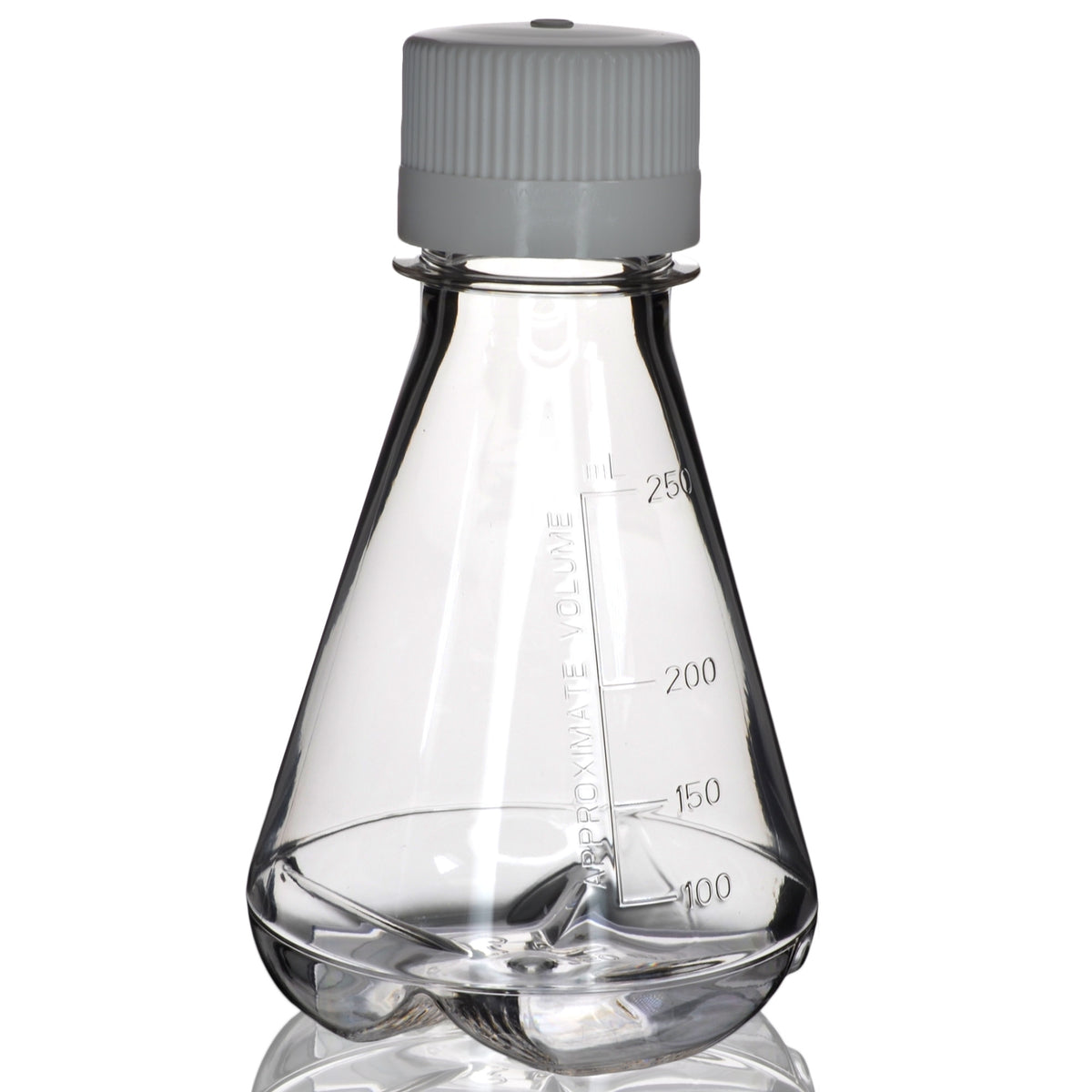
How Volumetric Glassware Is Calibrated: The ISO 4787 Method
Volumetric glassware is calibrated gravimetrically under ISO 4787: the piece is weighed empty and again filled with pure water, and the water's mass is converted to volume at 20 °C. The conversion corrects for water density and air buoyancy, and the result is judged against the item's tolerance.
How Volumetric Glassware Is Calibrated: Key Facts
| Method | Gravimetric: weigh water, convert mass to volume |
|---|---|
| Standard | ISO 4787: testing and calibration of volumetric glassware and plastic ware, 100 µL to 10,000 mL |
| Water | Pure (distilled or deionized) water, never tap water |
| Reference temperature | Volumes are stated at 20 °C |
| Conversion | Mass × Z factor = volume; Z is about 1.0029 mL/g at 20 °C and normal air pressure |
| What is recorded | Water temperature, air temperature, air pressure and humidity |
| Biggest technique factor | Setting and reading the meniscus |
| Result | The measured volume, compared with the item's tolerance |
What Is Gravimetric Calibration?
Gravimetric calibration finds a vessel's true volume by weighing the water it holds or delivers. Mass can be measured far more precisely than volume can be read by eye, and the density of pure water at each temperature is known exactly, so weighing turns into an accurate volume. ISO 4787 sets this as the method for volumetric flasks, pipettes, burettes and graduated cylinders from 100 µL to 10,000 mL. Its US counterpart is ASTM E542; see Laboratory Glassware Standards Explained.
New to the terms? Start with What Is Volumetric Glassware?
The Four Steps of ISO 4787 Calibration
- WeighWeigh the clean, dry vessel empty. Fill it with pure water to the mark, set the meniscus, and weigh it again. For a TD pipette or burette, weigh the water it delivers instead.
- RecordLog the water temperature and the air temperature, pressure and humidity at the time of weighing.
- ConvertSubtract the empty weight from the full weight to get the water's mass, then multiply by the Z factor for the recorded conditions to get the volume at 20 °C.
- JudgeCompare the volume with the nominal volume. The difference is the error, and it must fall inside the tolerance for the item's class.
Worked Example: A 100 mL Class A Volumetric Flask
| Step | Value |
|---|---|
| Empty flask | 85.412 g |
| Flask filled to the mark | 185.156 g |
| Mass of water | 99.744 g |
| Z factor (20 °C, normal air pressure) | 1.0029 mL/g |
| Volume at 20 °C | 99.744 × 1.0029 = 100.03 mL |
| Class A tolerance (ISO 1042) | ±0.10 mL |
| Result | +0.03 mL error: within tolerance |
The flask holds 100.03 mL at 20 °C, 0.03 mL over its nominal volume and well inside the ±0.10 mL Class A tolerance. A real calibration also corrects for the glass's own expansion and repeats the weighing; this example keeps to the core arithmetic.
What Changes a Calibration Result?
| Variable | Why it matters |
|---|---|
| Water temperature | Water's density changes with temperature, so the Z factor does too |
| Air pressure | Air pushes up on the water and the balance weights (buoyancy); pressure sets how much |
| Humidity | Humidity changes air density, so it enters the buoyancy correction |
| Water purity | The density tables assume pure water; tap water or dissolved impurities skew the mass |
| Glass expansion | Glass grows slightly when warm, so the vessel's volume shifts with temperature |
| Meniscus reading | Setting the meniscus a fraction of a millimeter off the line changes the volume measured |
NIST's gravimetric calibration procedure (SOP 14) calls volume calibration to a marked line "critically dependent on the setting of a meniscus."
How Much Does Temperature Matter?
A 1 °C error in the recorded water temperature shifts a 100 mL result by about 0.02 mL. That is one-fifth of the Class A tolerance from a single reading. It is why calibration labs log water temperature at every weighing and why volumes are stated at a reference temperature of 20 °C.
Why Your Own Check Can Disagree With a Certificate
A lab that rechecks a flask and gets a different number usually has a temperature or meniscus difference, not a faulty flask. If the water was warmer than recorded, or the meniscus was set slightly high or low, the result moves. Matching the certificate means using pure water, recording its temperature, and setting the meniscus the same way: the bottom of the curve level with the line, read at eye level.
How Batches Are Sampled
For a batch certificate, a sample from the production lot is calibrated, and the results stand for the lot. Sampling plans such as ISO 3951-1 set how many pieces to measure for a given lot size and quality level. See Glassware Calibration Certificates for how batch, individual and accredited certificates compare.
Shop Calibrated Volumetric Glassware
Glassware Calibration FAQs
What is gravimetric calibration?
It is calibration by weight: the water a vessel holds or delivers is weighed, and its mass is converted to volume using the density of water at the measured temperature. ISO 4787 specifies it for volumetric glassware. The Lab Stockroom carries volumetric glassware calibrated this way.
Why is water used to calibrate glassware?
Pure water's density is known precisely at every temperature, so its weight converts cleanly into volume. It is also easy to purify and leaves nothing behind on the glass. The Lab Stockroom's Glassware Knowledge Center explains the full ISO 4787 method.
How does temperature affect glassware volume?
Water expands as it warms and glass expands slightly too, so a measured volume depends on temperature. That is why volumes are stated at 20 °C, and a 1 °C error in water temperature shifts a 100 mL result by about 0.02 mL. Eisco volumetric glassware at The Lab Stockroom is marked with its reference temperature.
What is the biggest source of error when reading volume?
The meniscus. Calibration to a marked line depends on setting the bottom of the curved water surface level with the line, read at eye level. The Lab Stockroom recommends reading every volumetric piece the same way, every time.
Standards Referenced
- ISO 4787: methods for testing the capacity of volumetric glass and plastic ware
- ISO 1042: one-mark volumetric flasks
- ISO 3951-1: sampling by variables, indexed by AQL
- ISO/IEC 17025: competence of testing and calibration laboratories
How Eisco Controls Its Calibration Conditions
Eisco, one of the manufacturers The Lab Stockroom carries, calibrates its volumetric glassware gravimetrically under ISO 4787 and controls the variables that move the result: the water, the air and the instruments.